Van Gogh Beneath the Bandage
Van Gogh Beneath the Bandage
Coming to auction
This work will be included in a Catawiki auction within the next 10 days. Join the collectors list below to follow our auctions.
Occasional e-mails only. Unsubscribe anytime. Privacy policy.
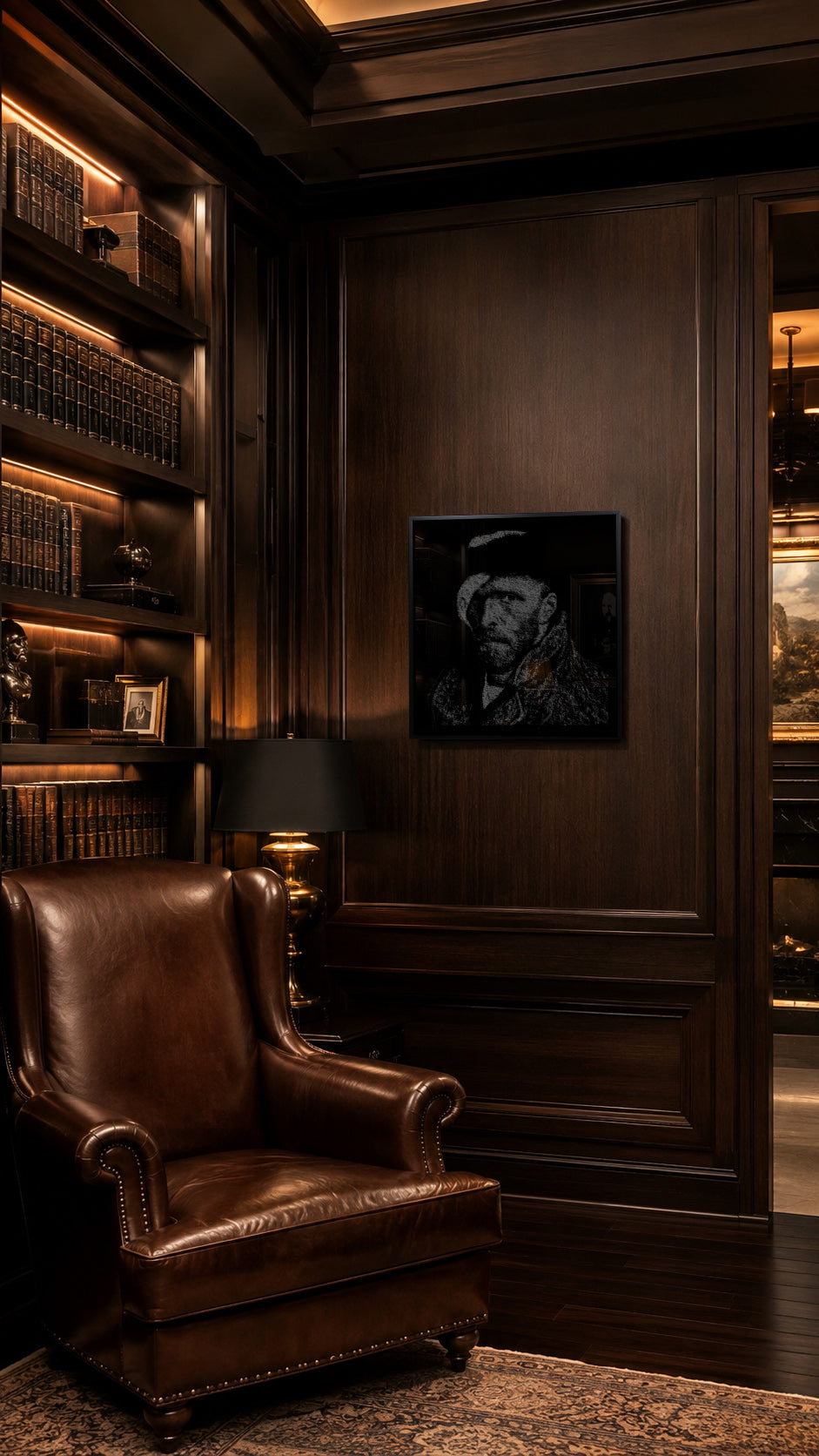
This portrait finds Vincent van Gogh in the quiet that follows a crisis: the bandage wound close around his head, a heavy coat drawn up against the cold, his eyes fixed somewhere just past the viewer with that same searching intensity the world knows from his self portraits. It is the face history remembers, caught at the exact moment it becomes most human.
The story behind the bandage is one of the most retold in art history, yet it is almost never looked at this closely. Here, every hair of the fur hat, every fold of the coat, every line carved into the brow exists only because material has been removed, not added. No paint. No print. No ink. The portrait is built entirely from controlled scratches worked into acrylic glass.
From across a room the image settles into something calm and almost monumental, a man composed despite everything he is carrying. Move closer and that calm gives way to a dense field of controlled surface damage, a landscape of fine marks that only resolves back into a face once you step away again.
The portrait is always visible, with or without directed light. But light is never indifferent to it. As it shifts, the scratches catch and reflect, the contrast deepens, and the bandage and the gaze both seem to sharpen. Light does not create this image. It sharpens what is already there.
What sits beneath the bandage is the real subject: not the wound itself, but the decision to be seen wearing it. Nothing here is hidden or softened. The damage is worn openly, in the man and in the material both, and that likeness becomes the quiet center of the piece.
This work continues the Art with Scratch series by Tijs Dragtsma, in which imagery is constructed through controlled surface damage rather than pigment or print, and in which a wound, carried openly, becomes the very structure that holds an image together.
"Damage is not destruction. It is structure."
More about the artist, process and materials can be found on the About page.
Questions about this work, availability or shipping can be sent through the contact page.